All projects

Prochron
A daily history puzzle: stamp what couldn’t be there yet.
- Status
- In development
- Platforms
- Web
- Started
- 2026
- Built with
- JavaScript, Vite, Web Audio, Python
Why I made it
I set Claude Code a brief one night: invent a genuinely original daily word and trivia game for the web, plan it, and have something playable by morning. Prochron was its idea. I chose the name and asked for the current look, and it has kept developing the game in a loop since.
The bar I hold it to is that you think, but not hard; most players finish; and you leave knowing something true you didn’t know before, as the payoff rather than a lecture. Once you finish, you’re done until tomorrow.
What it does
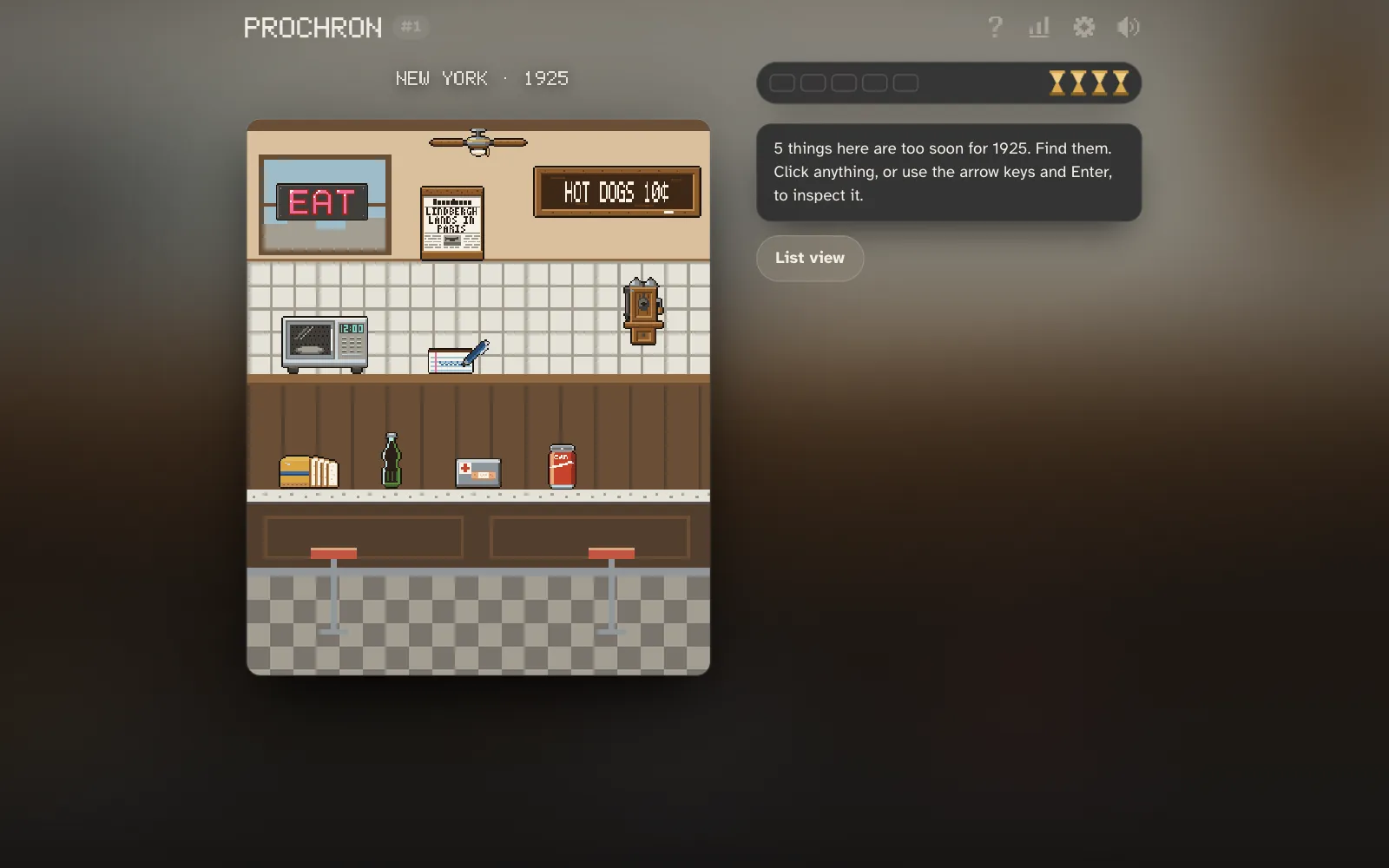
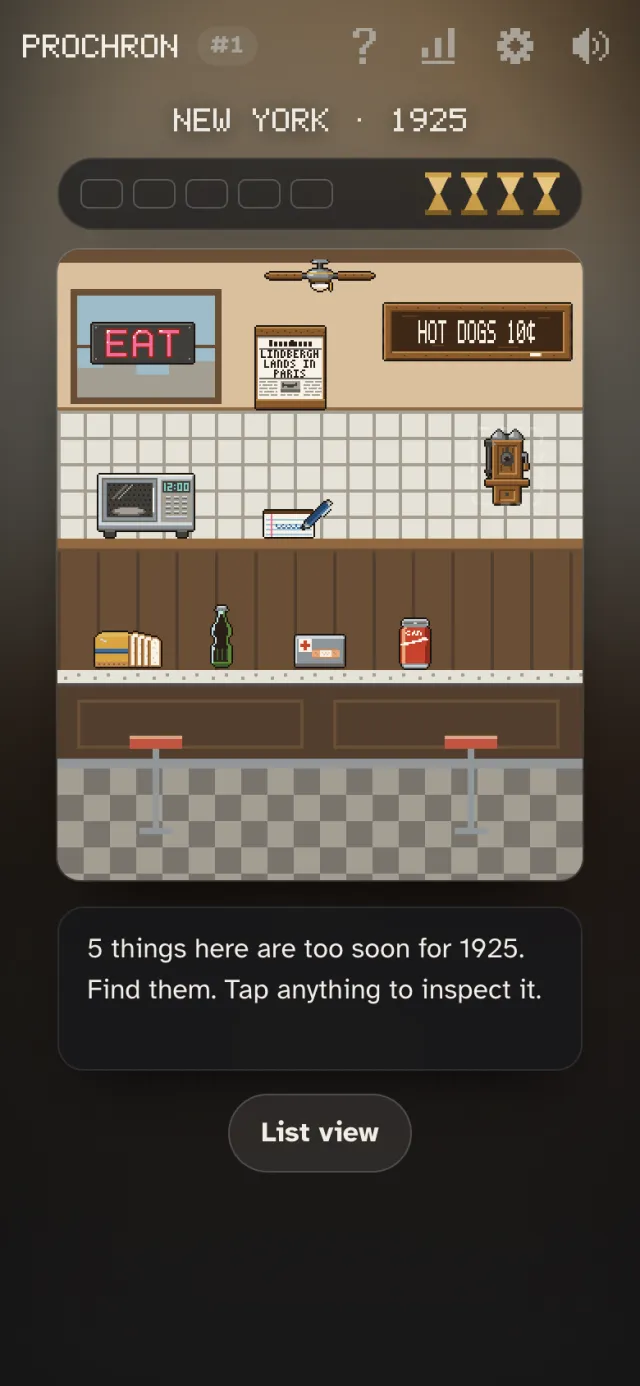
- One scene a day, the same for everyone, holding 11 or 12 named things. Four or five of them are too soon for the year on the plate.
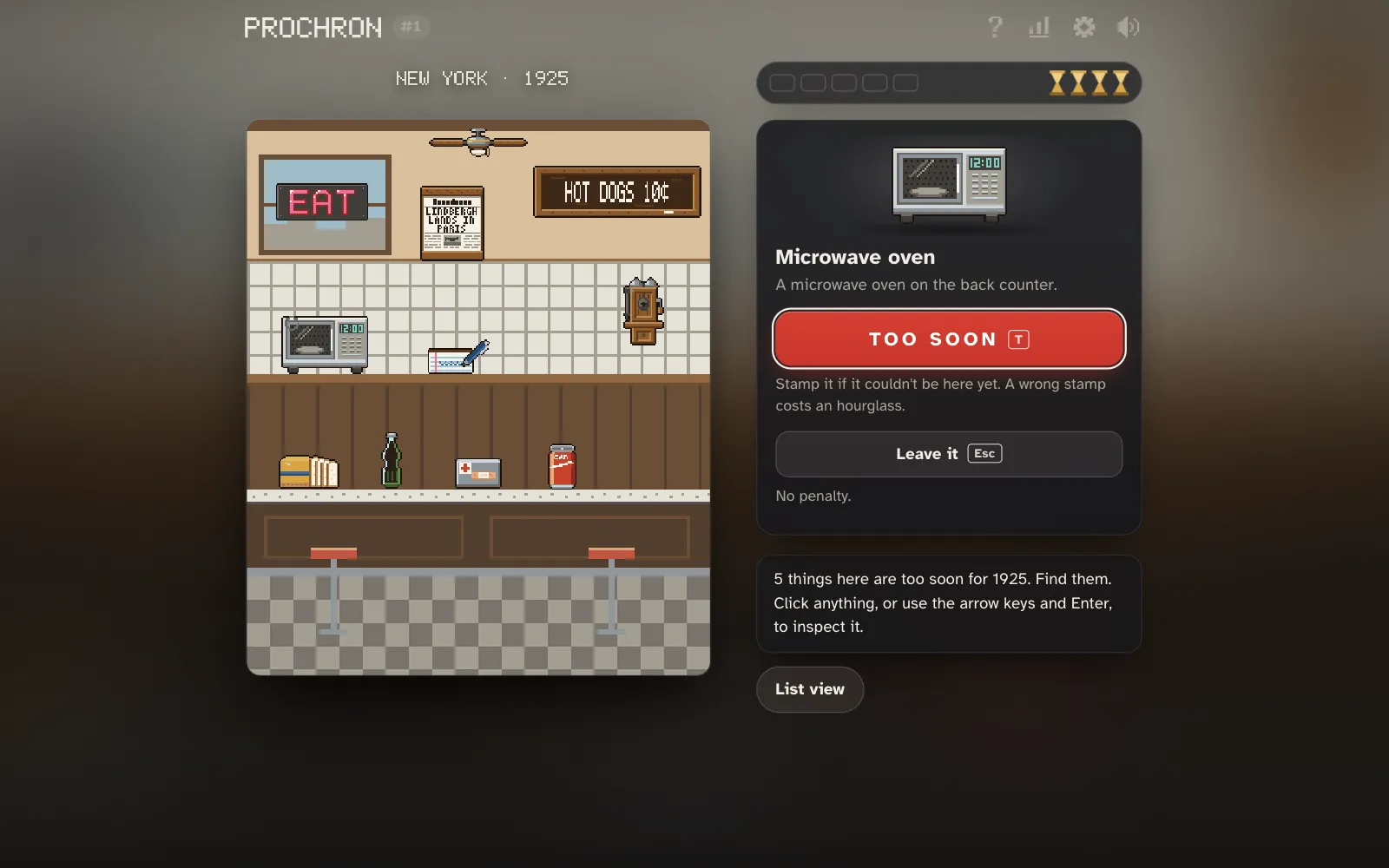
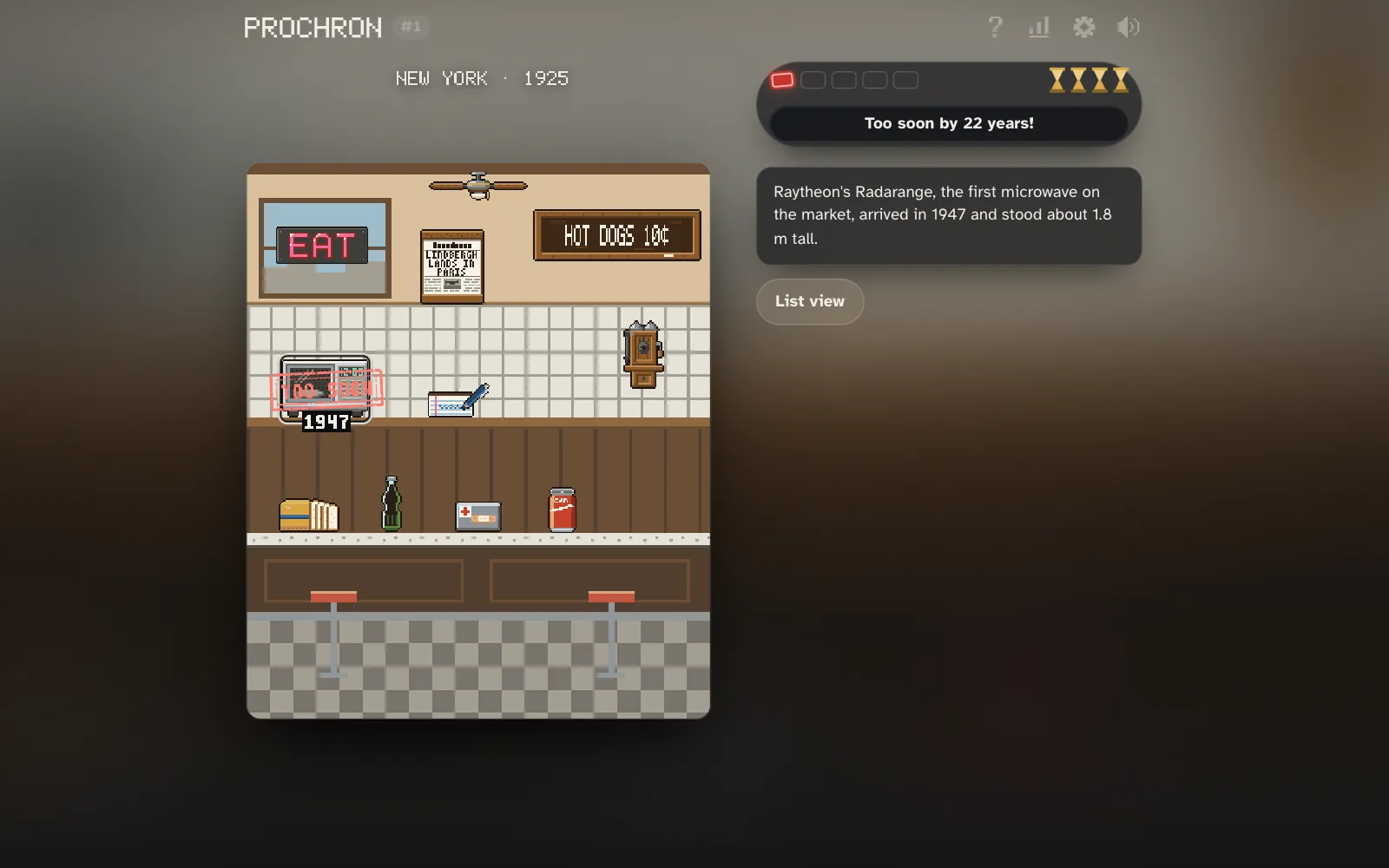
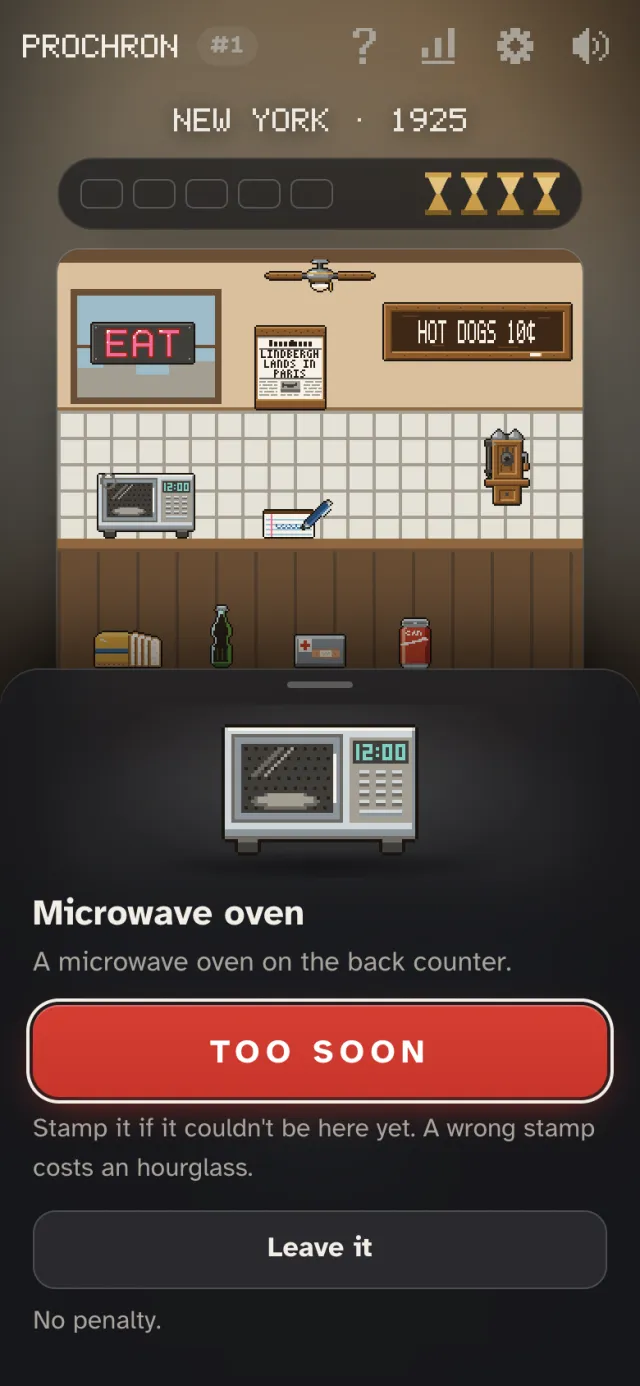
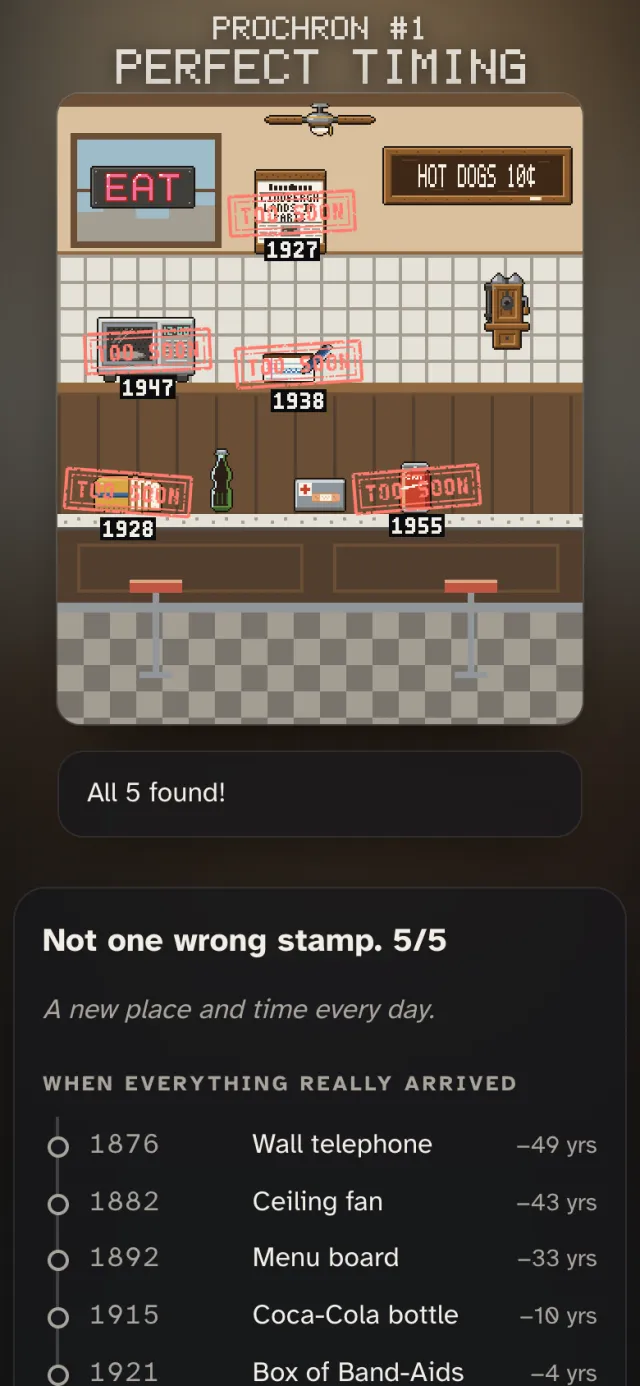
- Stamping one reveals the year it really arrived, with a sourced fact. A wrong stamp costs one of four hourglasses and tells you how much older it is than you thought.
- Some answers are subtle, and some things that look too modern are traps that really were there.
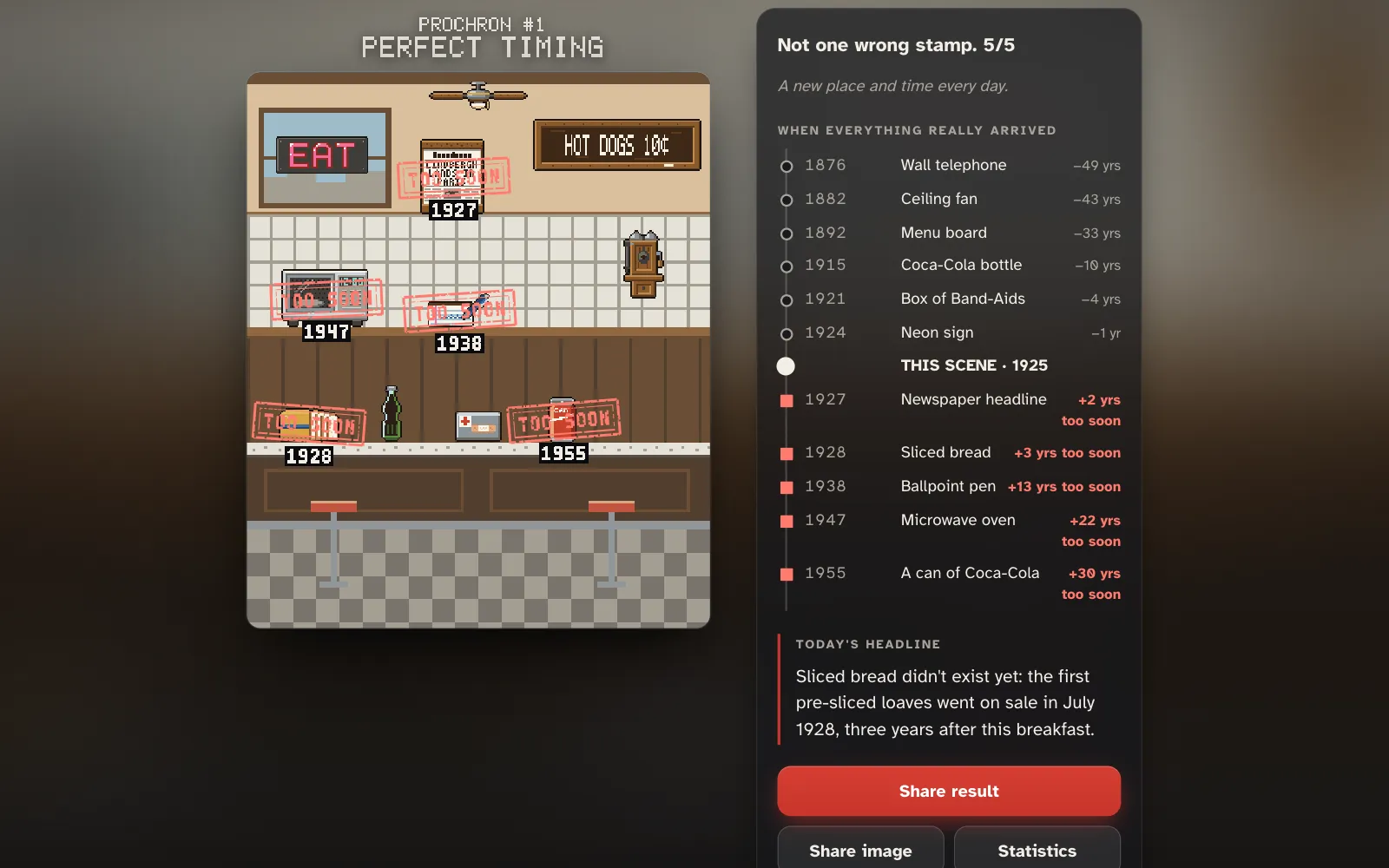
- Win or lose, the day ends at the Exhibit: the stamped scene, a ribbon of when everything arrived, and the day’s best fact.
- A spoiler-free share, as text or an image card, plus streaks and statistics.
- One thumb on a phone or the keyboard on a computer. Playable with the sound off and with reduced motion, and colour is never the only signal.
- 31 days are written and drawn so far, including New York in 1925 and Rome in 44 BC.
Screenshots
Under the hood
- Every fact the game teaches is checked against a source, and the source is recorded. Subtle answers and traps need two independent sources.
- All the art is drawn from palette-indexed pixel grids and all the sound is synthesised in the browser, so the game ships no image or audio files.
- It builds to static files with no server code, accounts, cookies, analytics or third-party requests, and runs under a strict Content-Security-Policy. Progress lives in the browser.
- Each day is its own file, fetched when played and scrambled so that future answers aren’t sitting in plain text.
- It’s live for testing and still being built.